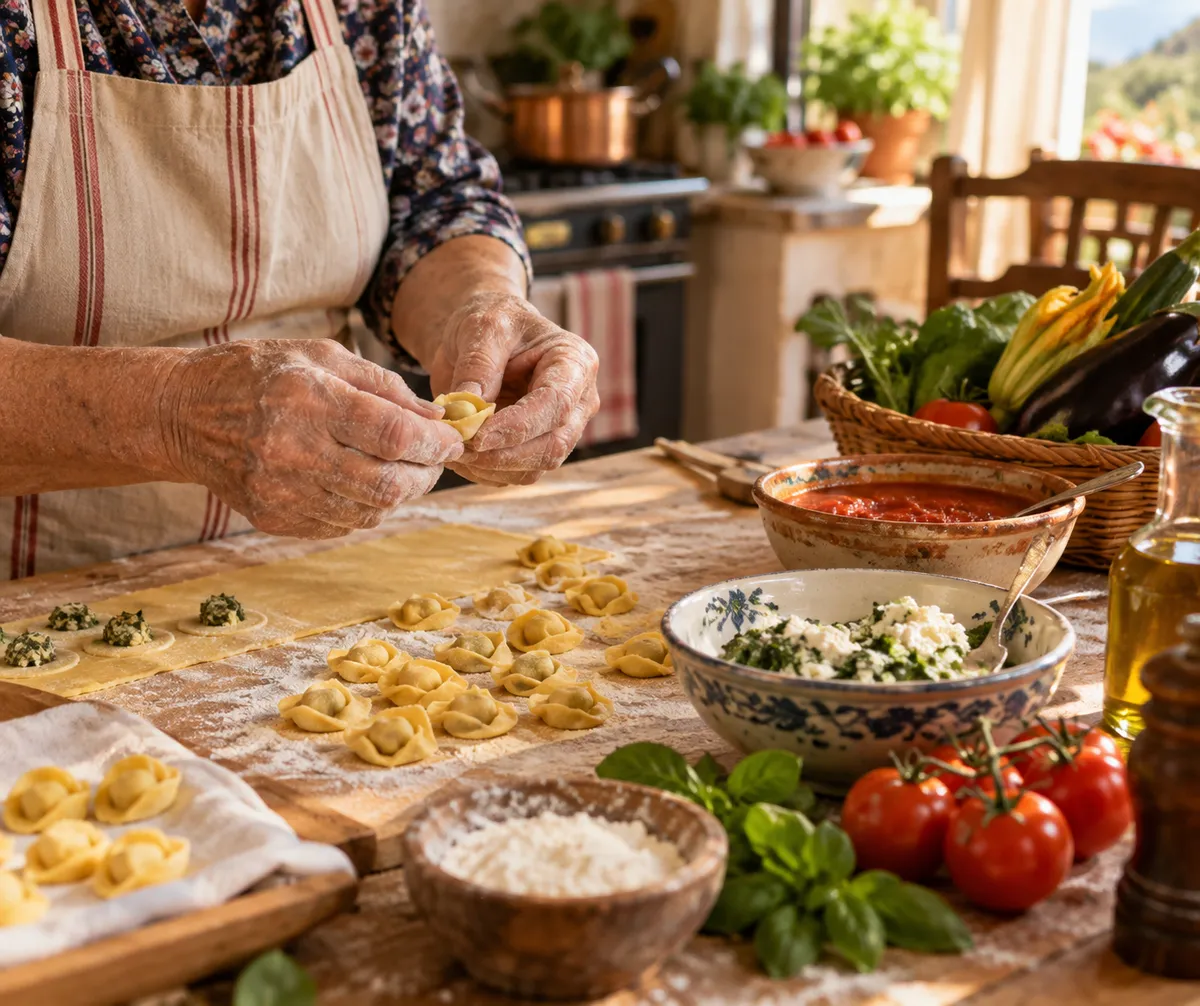
Vicky Bennison, the author and creator of Pasta Grannies, is back in the spotlight. Vogue this week profiled the project, which documents the older Italian women, the nonne, who keep handmade pasta traditions alive and share a little life wisdom along the way. The piece also spotlights Bennison's new cookbook, Eat Everything, and includes a recipe for Rosa's cicatelli con ciambutella.
The timing is neat. Per Vogue's framing, interest is growing in slow living, heritage cooking, longevity and low-waste food culture. Pasta Grannies sits right in the middle of all four, without a single supplement stack in sight.
La Dolce Vita, Minus the Filter
Most of us know "la dolce vita" as an aesthetic: spritz on a terrace, linen everything, a scooter that is definitely not ours. The Vogue piece pushes a more practical reading, and that is the angle worth stealing: la dolce vita as a set of everyday habits rather than a vacation mood board.
Those habits, as the coverage frames them, boil down to a short list:
- Cook with what you have.
- Stay social.
- Keep moving.
- Preserve family recipes.
None of that requires a plane ticket. It's also, it's hard not to notice, the opposite of the hyper-optimized wellness routine, where the day starts with a cold plunge and a spreadsheet. The grannies' approach looks closer to: roll dough, talk to someone, eat it.
The "Eat Everything" Mindset
Bennison's new book title says it plainly. Eat Everything ties into the low-waste thread of the profile: the idea that a good kitchen uses what's on hand rather than treating the fridge like a store to be restocked. The recipe Vogue shares, Rosa's cicatelli con ciambutella, fits that spirit as a handmade-pasta dish from the nonne tradition. (I can't vouch for the ingredient list or method here, so head to Vogue for the full recipe.)
For a home cook, the translation is simple, and it's my take rather than Bennison's instruction: before you shop, cook the thing you already own. Pasta has long been a pantry-rescue food, and the grannies treat that as a feature, not a compromise.
Why Handmade Traditions Are Worth Saving
The Pasta Grannies project is, at heart, documentation. These are women who hold techniques and recipes, and Bennison's work records them, along with their perspective on life. Vogue positions that as part of a broader hunger for intergenerational knowledge, the kind that doesn't live in a search result.
Pop-culture homemaking has an obvious parallel. We love a cozy, inherited-kitchen fantasy on screen. The more useful version is asking your own relatives how they make the dish you remember, and writing it down while they can still correct your technique. A recipe card in someone's handwriting beats any viral reel.
A Small Starter Plan
You don't need to make cicatelli by hand on a Tuesday. Try this scaled-down version of the philosophy, drawn from the habits above:
- Cook one meal this week from what's already in the kitchen. Skip the shopping trip.
- Make it social. Invite someone, or cook with them.
- Take a walk afterward. Keeping moving counts.
- Record one family recipe. Ask, write, photograph the card.
That's it. No tracking app.
The Sweet Part
The sharpest thing about Pasta Grannies is how unglamorous the formula is: flour, hands, company, leftovers put to use. If "la dolce vita" ever felt like something you needed to book, this is the quiet correction. The good life, per Italy's nonne, looks a lot like dinner with people you like.