The story: One Update, One Very Visible Room
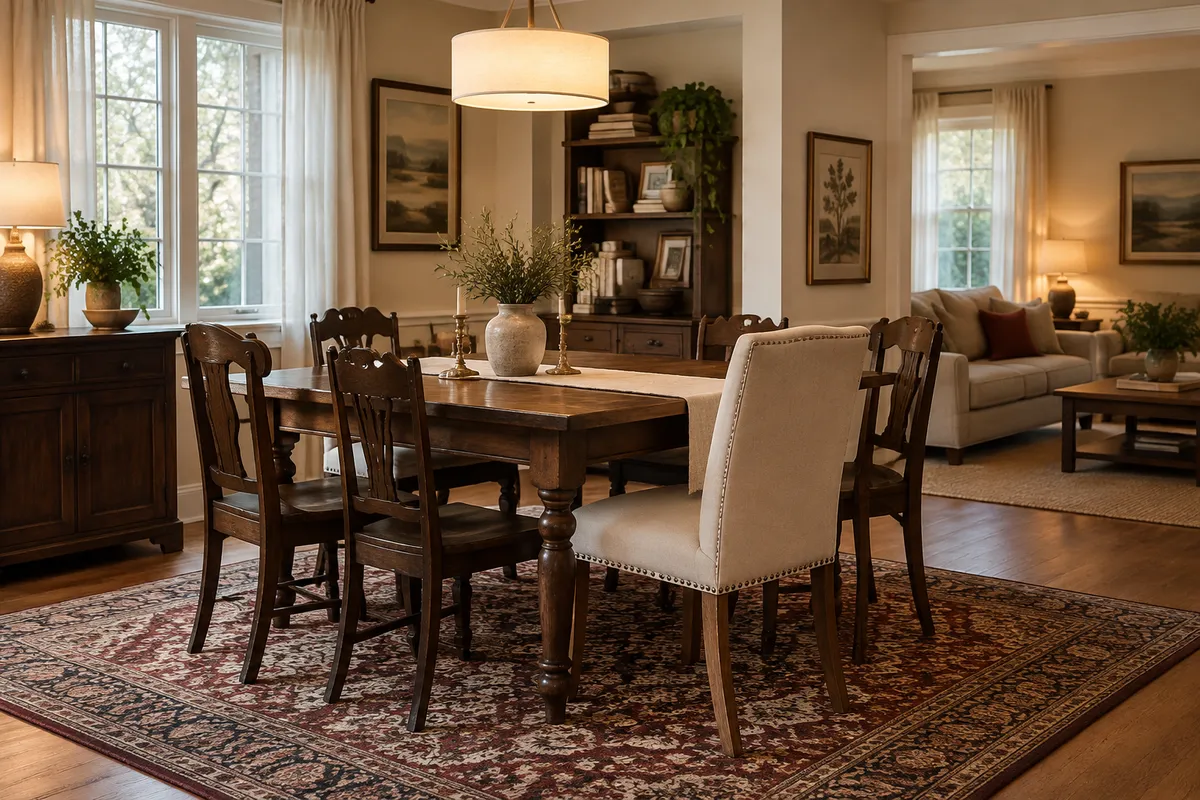
Apartment Therapy recently spotlighted a dining room makeover in which a single DIY update changed how the whole space reads. The furniture, per the outlet's headline, looked dated until that one project came along. The setup is the kind that raises the stakes: the dining room can be seen from almost every point on the first floor, so, as the description puts it, the design needed to pack a punch.
That's the story in a nutshell. No full furniture replacement is described, just one change that helped the space feel more intentional and stylish.
The summary I have doesn't spell out which DIY did the heavy lifting, so I'm not going to guess at the paint color, the stain, or the hardware. What the story does give us is a useful principle, and that's what's worth chewing on.
The Take: Your Furniture Probably Isn't the Problem
Here's my read, and it's squarely opinion: dated furniture is often less a furniture problem than a context problem. A dining set that has been sitting there looking tired can feel like a sunk cost, the kind of thing you assume you'll have to replace eventually. The Apartment Therapy story suggests another route: change one thing about it and let the room recalibrate.
Think of it as the home version of a makeover-montage cliché. In every good one, the transformation is not a whole new person. It's one smart change (the haircut, the jacket) and suddenly everyone is looking at the same person differently. Your dining table can have its own Princess Diaries moment without a new table.
Why a Visible Room Raises the Stakes
The detail I find most useful is the sightline. According to the piece, this dining room is visible from nearly everywhere on the first floor. That's the open-floor-plan reality: the room isn't tucked behind a door, so it works more like a set piece than a side room. Whatever's in it is effectively part of the view from the sofa, the kitchen, and the entryway.
It's hard not to see why a single update would pay off so well here. When a space is on constant display, one visible improvement does more work than it would in a closed-off room. Fix the thing everyone's eye lands on, and the whole floor benefits.
What to Steal From the Idea
The summary frames this as a "one-change transformation," and the broader categories it points to are paint, stain, upholstery, or styling. To be clear, those are general examples of the kind of update that can modernize a room, not a confirmed list of what this homeowner did. Still, they make a handy checklist for your own diagnosis:
- Look at the biggest surface. What takes up the most visual space in the room, and is that the thing that feels old?
- Think from the sightline. Stand where you'd most often see the dining room from and note what your eye hits first.
- Pick one move. The appeal of this approach is restraint. One change, done well, beats five half-committed ones.
- Keep the furniture. The point is to update what you own without replacing it.
Why This Lands Right Now
Budget-friendly upgrades are resonating with homeowners who want high-impact changes without buying new major furniture, and DIY refreshes tend to perform well because they make good design feel achievable. That tracks. A before-and-after is satisfying precisely because the "before" is something you recognize from your own house.
There's also something quietly reassuring in the premise. Most of us aren't redoing a dining room from scratch. We're living with a table we bought years ago, or inherited, or agreed on during a very different phase of life. A story that says that table can look current again is easier to act on than a gut renovation.
The Bottom Line
The lesson isn't a specific product or technique, since the details of this particular project belong to Apartment Therapy's original piece. It's the mindset: before you price out a new dining set, ask whether one well-chosen update could make the old one look like a decision rather than a leftover. In a room the whole first floor can see, that's a very good bet, and it costs a lot less than starting over.