A UK government watchdog has warned that homes in the country aren't prepared for possible food supply disruptions, the kind that could follow cyberattacks, power outages, disease outbreaks, or extreme weather. That's per a report from Medicalxpress, which also points out the gap in the official advice: telling people to stock "nonperishable food" is a start, not a plan.
The piece makes the case for a stockpile that's actually nutritious. So let's take that angle and run with it: an emergency pantry you'd be fine eating from, because if the lights go out, nobody needs a morale problem on top of a power problem.
Why "Just Buy Nonperishables" Falls Short
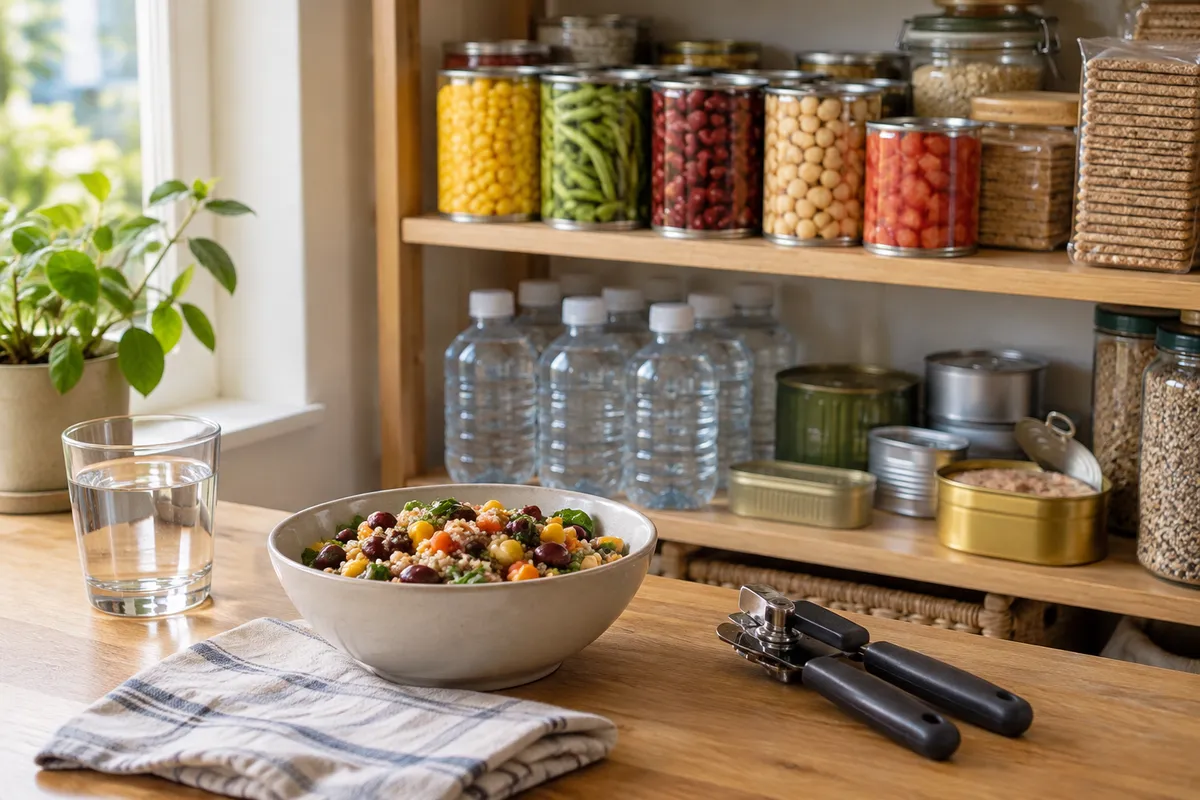
Per Medicalxpress, preparedness should go beyond the generic label and include balanced protein, whole-grain carbohydrates, canned vegetables, water, supplements, and practical gear like a can opener.
It's hard not to notice how that list reads: it's basically a normal healthy plate, just shelf-stable. That's the useful reframe. An emergency pantry isn't a separate, grim universe of food. It's your regular eating, built to survive a bad week.
The Building Blocks
Protein
Balanced protein is the first item on the source's list. Think of this as the anchor of every meal: the thing that makes a pot of something feel like dinner instead of a snack with ambitions. Shelf-stable options are the natural fit here, and the point is to pick ones you'd genuinely eat.
Whole-grain carbs
The emphasis on whole-grain carbohydrates matters. It's the easy-to-skip upgrade: the same pantry slot, but with more staying power than the refined alternative. Our take: if you're going to store it for months, you may as well store the version that does more for you.
Canned vegetables
Canned vegetables get a spot because fresh produce is the first thing to vanish in a disruption. They're the unglamorous hero of the whole operation, a bit like the stage manager of a Broadway show: nobody claps, but nothing runs without them.
Water
Water makes the list as its own item, which is a reminder that food planning without drinking water is only half a plan. It's also the one that tends to get forgotten because it doesn't feel like "shopping."
Supplements
Medicalxpress also flags supplements, including multivitamins, as part of a healthier stockpile. The logic, as we read it, is simple: a limited pantry can get repetitive, and a multivitamin is cheap insurance against gaps. That's our interpretation, not a medical prescription, so check with a professional about what suits your household.
The Item Everyone Forgets
The can opener. It's right there in the source's list, and it's the sort of detail that sounds like a sitcom setup: a cabinet full of canned goods and a household that has only ever opened them with a pull tab. Check that you own a working one. Maybe two.
How to Make It Feel Less Doom-Prepper, More Dinner
The source's framing is health-first and practical, and that's the right tone. A few ways to apply it, offered as our suggestions:
- Shop in pairs. Pair each protein with a whole-grain carb and a canned vegetable, so every combination is a complete meal template.
- Buy what you already eat. A stockpile of foods you dislike is a stockpile you'll resent, and it will quietly expire in the back of a cupboard.
- Rotate it. Use the oldest items in regular cooking and replace them, so your emergency stash doubles as your weeknight pantry.
- Watch the salt and the fiber. Canned and packaged foods can skew salty and light on fiber, which is why whole grains and vegetables earn their place. Treat that as a nudge to read labels, not a rule carved in stone.
A Starter Checklist
Based on the categories Medicalxpress highlights, here's a simple way to organize a shopping trip:
- Protein you'll actually eat
- Whole-grain carbohydrates
- Canned vegetables
- Drinking water
- Multivitamins or other supplements
- A can opener that works
The source doesn't specify quantities or a number of days in the material we have, so size it to your household. Count heads, count appetites, and keep it realistic for your budget and storage space.
The Real Takeaway
The watchdog's warning is the news, but the more interesting idea is the one underneath: preparedness doesn't require a bunker aesthetic. It requires a shelf of food you'd be happy to cook on a normal Tuesday, plus a can opener. The apocalypse, it turns out, is best faced with a decent grain bowl.