Women's Health recently asked a dietitian the question that haunts every desk lunch and every 6 p.m. fridge stare: can a meal replacement shake or powder actually replace a meal? The piece walks through when these products can be useful, how they differ from protein powder, and what to look for nutritionally. It also names a few recommended products: Huel Black Edition Ready-to-Drink as best overall, Ka'Chava Superblend Shake as best powder, and OWYN Plant-Based Protein Drink as best allergen-friendly.
This is the part where a certain kind of pop-culture homemaker would pour a shake into a mason jar and call it a "lifestyle." Let's slow down and look at what the piece actually says, and what that means for your real week.
Why Shakes Are Having a Moment
Per Women's Health, the appeal comes from a familiar pile-up: busy schedules, rising food costs, and the broader pull of wellness-flavored convenience. Shakes are marketed at people who might otherwise skip a meal or lean on takeout.
That framing matters. The honest comparison isn't shake versus a beautifully plated grain bowl you definitely would have made. It's shake versus nothing, or shake versus a drive-thru. Seen that way, it's easier to understand why a dietitian would say these products can have a place.
The flip side, as the piece notes, is a crowded supplement market where it's hard to tell which products are actually meal-worthy. A tub covered in the word "complete" is still just a tub.
The Angle That Matters: Meal Replacement Is Not Protein Powder
Of all the questions the article raises, the one worth committing to is the difference between a meal replacement and a protein powder. Women's Health covers it as a core part of the dietitian's explanation, and it's the mix-up that trips people up most.
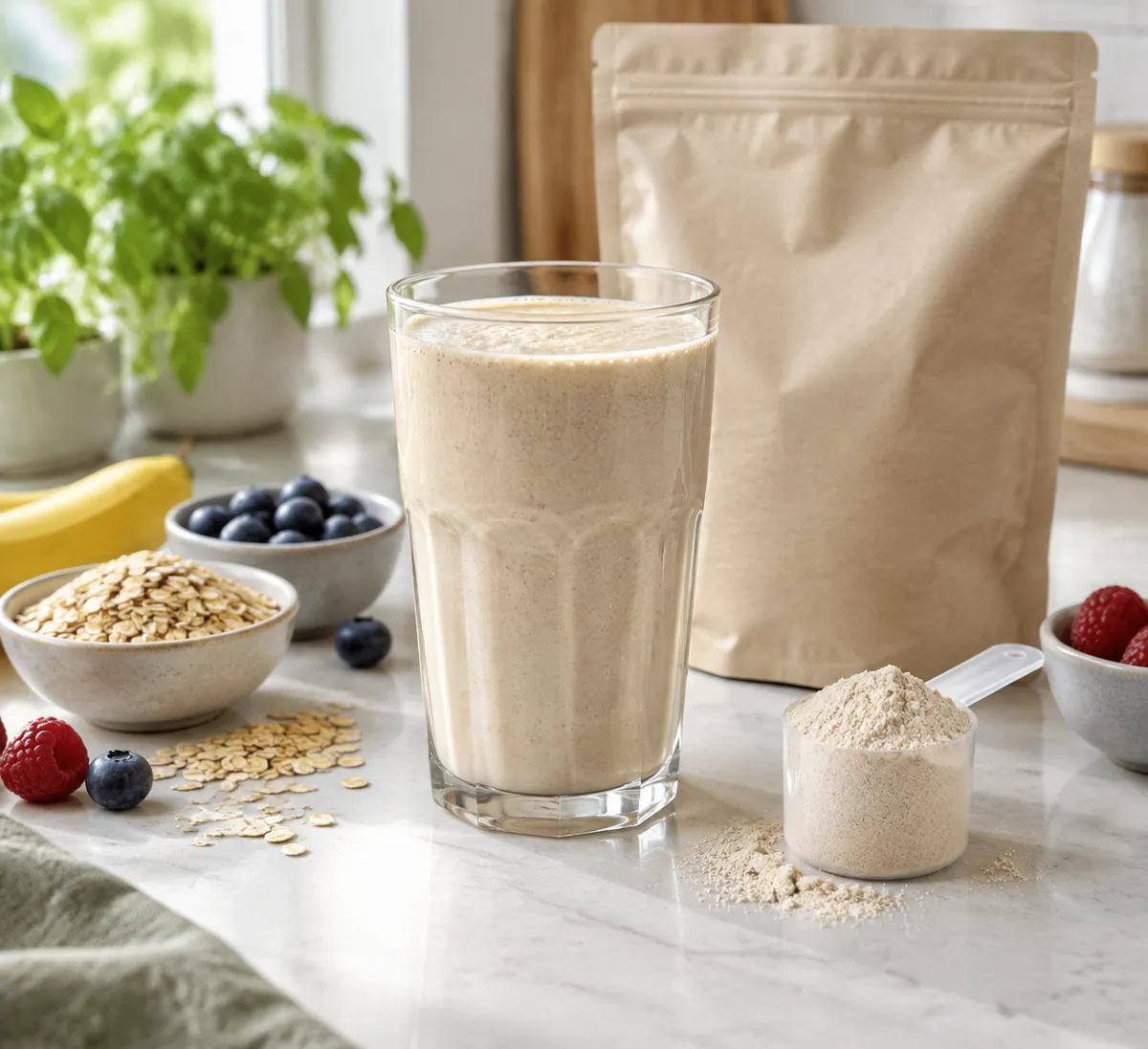
It's hard not to see why. Both come in big containers, both get blended, and both show up in the same aisle with the same gym-adjacent branding. But they're built for different jobs. A protein powder is, in spirit, a boost: something you add to a smoothie, oats, or yogurt. A meal replacement is meant to stand in for the whole meal, which means it has to bring more than protein to the table.
That's our read of the distinction, and it lines up with what the dietitian reportedly emphasizes: look at the nutrition overall, not just the protein number on the front.
What a Meal Should Provide
The article points readers toward the nutritional markers that make a shake meal-worthy. The ones to check are calories, protein, fiber, and ingredients, plus how the product fits real-life use.
Here's a practical way to put that to work, framed as our take rather than a quote from the dietitian:
- Calories: A shake that lands at a snack-sized number is a snack, whatever the label says.
- Protein: Useful for staying full, but it shouldn't be the only thing the label brags about.
- Fiber: A meal that's mostly liquid and low in fiber may leave you hunting for crackers by mid-afternoon.
- Ingredients: Read the list. Some ingredients are commonly associated with bloating, which is not what you want before a meeting.
If you want to go deeper, treat your last real meal as the benchmark. Would the shake hold up next to it?
The Three Picks
Women's Health named three products, each in its own lane:
- Best Overall: Huel Black Edition Ready-to-Drink. The grab-and-go option, no scooping required.
- Best Powder: Ka'Chava Superblend Shake. For people who prefer to mix their own, with a tub that lasts.
- Best Allergen-Friendly: OWYN Plant-Based Protein Drink. A plant-based pick for those navigating allergies.
The outlet's coverage also highlights benefits and drawbacks of the category, though the details beyond these picks are best read in the original piece. We're not going to invent nutrition numbers for any of them. Check the labels yourself, using the checklist above.
How to Make It Work in a Real Kitchen
The meal-prep angle here is almost boringly practical. A shake is the one meal that requires zero chopping, zero cleanup beyond a bottle, and zero decisions at 7:45 a.m. For people who currently skip breakfast or order lunch out of sheer exhaustion, that's a real advantage, and it's the case Women's Health makes for the category.
But convenience is a tool, not a personality. A sensible approach, and this is our spin, is to keep a shake as your backup plan rather than your entire food identity. Stock one for the days the fridge is empty and the calendar is full, and keep cooking on the days you can.
It also helps to think of the bottle as a floor, not a ceiling. If a particular shake looks light on calories or fiber, that's a signal to pair it with something real instead of assuming it's a full meal on its own.
The Bottom Line
The most useful takeaway from the dietitian's advice isn't which brand won. It's that the word "meal" on a label is a claim, and claims deserve a read-through. A shake can rescue a chaotic Tuesday. It just has to earn the title the same way a sandwich does: by actually being enough.